


For schools Awareness training for classes
Two lessons from year 5, in the class's language rather than the handbook's – with real cases the pupils know.
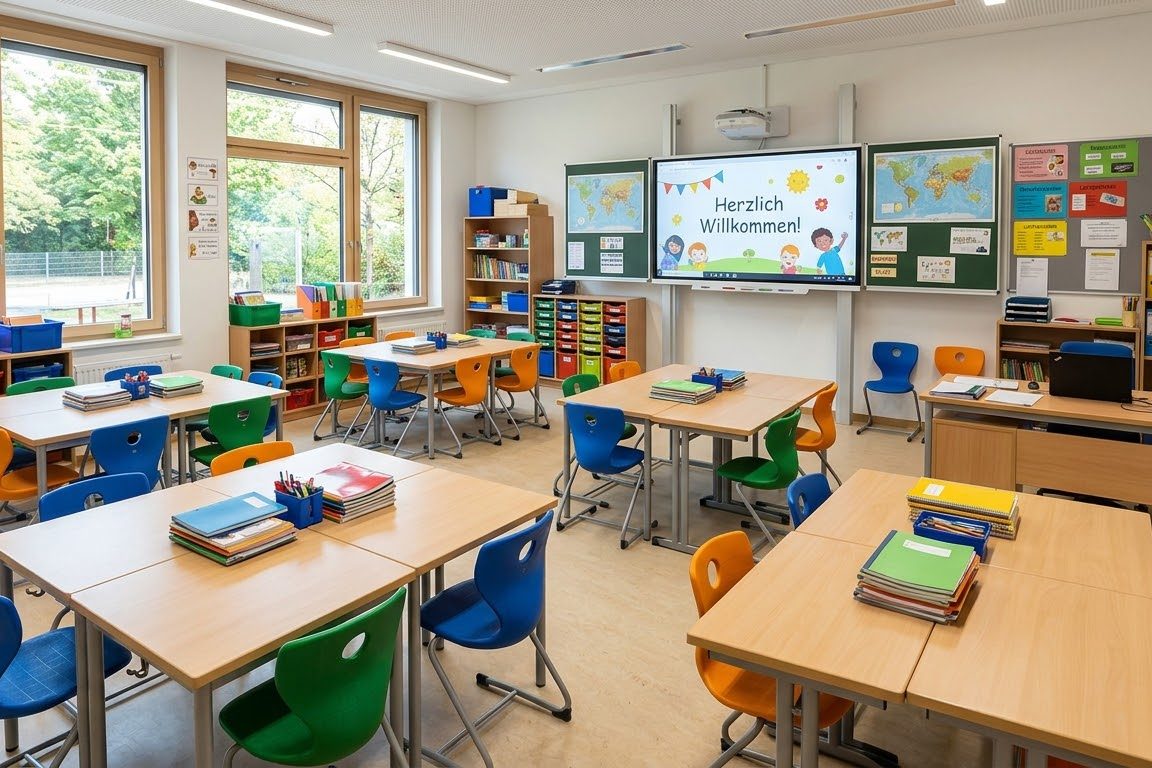
- Who we serveClasses from year 5. Content and examples are adapted to the age group – lower secondary differs from upper secondary.
- What happensNo lecture: we show real scam attempts and let the class find the warning signs themselves.
- What remainsThree to four concrete rules that can be applied in everyday life – plus an information sheet for home.
Awareness training for classes
- Two lessons per class (90 minutes)
- Age-appropriate case studies: fake prize draws, account theft in games, pressure in group chats
- Live demonstration of how quickly a weak password falls
- Information sheet for pupils and parents or guardians
- Short report to the head – anonymised, without individual evaluation
How it works in practice.
Preliminary meeting
Coordination with the head: age groups, number of classes, current incidents at the school, teachers' wishes.
Session 1
What fraud looks like today. We show real messages and let the class decide for themselves: real or fake?
Session 2
What protects you. Passwords, two-factor authentication, handling images and what to do if something has happened after all.
Follow-up
Short report to the head on the topics that stood out at this school – without names.
A forged message designed to get you to do something – usually click a link and enter credentials. Modern variants are linguistically flawless and refer to real events in your organisation.
A supposed message from management with an urgent request for a transfer, often combined with a request for confidentiality. It is precisely this combination of urgency and secrecy that gives it away.
We send a harmless but realistic phishing email to your team ourselves. Nobody is harmed, nothing is installed. We measure how many click – and how many report it.
A reported attack is an attack fended off. That is why the most important number is not how few click, but how many speak up. Evaluation is always anonymous, never by name.
What is included – and what explicitly is not.
Typical scope
Two to six classes in one morning. For larger schools we spread it over several dates.
Duration
Two lessons per class, i.e. around 90 minutes including questions.
Prerequisite
A room with a projector and a teacher who stays present.
Not included
No evaluation of individual pupils, no monitoring of devices, no individual advice for parents.
Training reduces the likelihood but doesn't replace technical measures. If the school network lacks separation between the teaching area and administration, awareness alone helps little.
What people ask beforehand.
No – that is exactly what we avoid. We don't show shocking images and don't work with fear but with curiosity: the class gets to find out for itself how to recognise a scam. That sticks better and makes them capable rather than anxious.
No. We don't collect names, device data or login data. The report to the head contains only topics, no people.
From year 5, because that is usually when the first own accounts and messengers come along. For upper secondary the content shifts towards identity theft, deepfakes and application data.
Yes, as a separate session within in-school training. The content differs significantly – there it is about official data, grade management and phishing on staff accounts.
More offers for you.
Awareness training for classes
Two lessons from year 5, in the class's language rather than the handbook's – with real cases the pupils know.
School network check
A technical assessment tailored to the reality at schools: limited budget, curious users with a lot of time and particularly sensitive data.
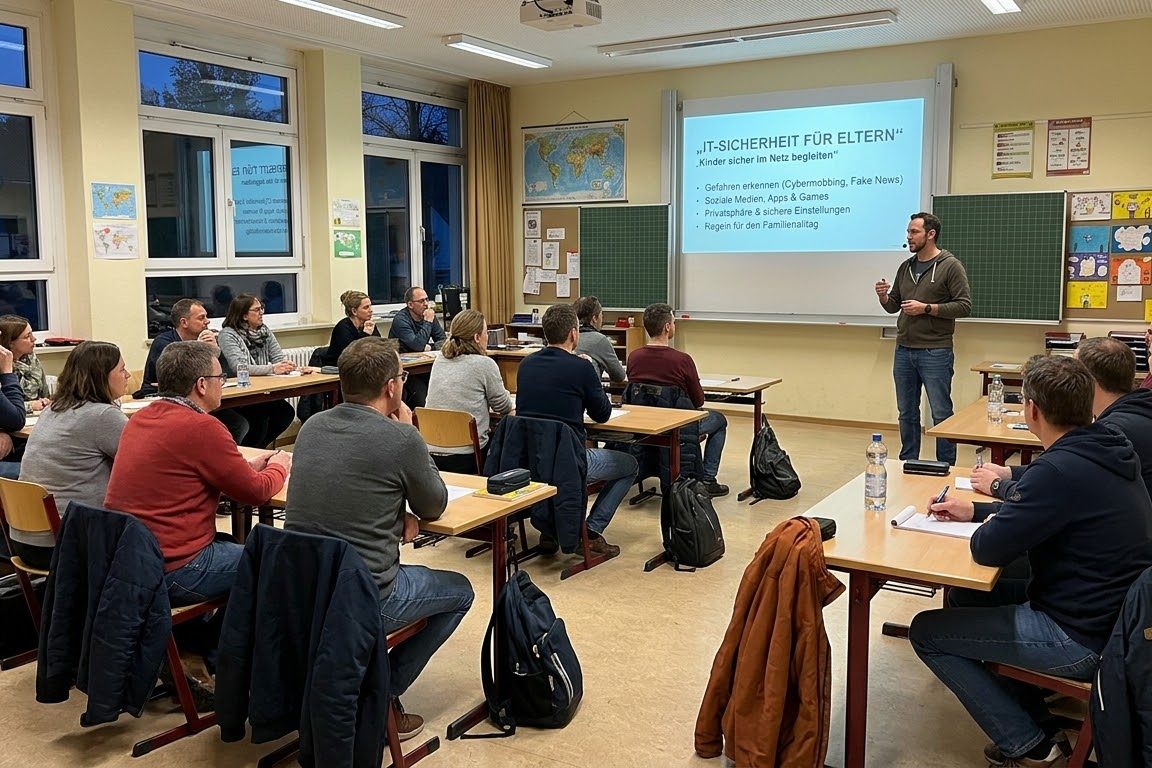
Parents' evening on digital safety
An evening for parents and guardians that is not about bans, but about what actually helps at home.
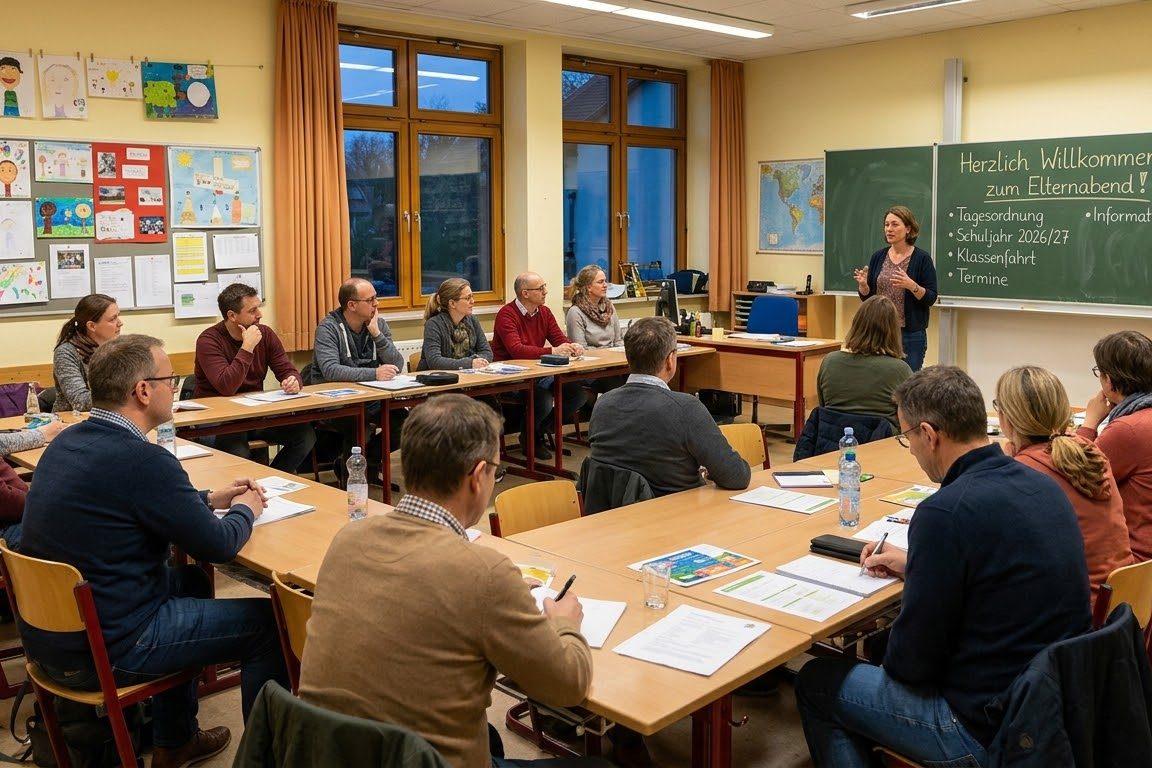
Training for teachers
In-school training that starts where teachers actually bear responsibility: grades, pupil data and their own staff account.
What can be found publicly about your school
A passive assessment without any risk: we gather what is freely available online about your school – from forgotten logins to data in published files.
What we encounter in assessments, before you encounter it.
Not a product newsletter. We write about attack paths that actually worked against Austrian businesses, authorities and schools – and what helps against them.
- About once a month, not every week
- Concrete attack paths from real assessments
- No tracking pixel, no sharing with advertisers
- Unsubscribe with one click in every email